Best Digital Business Cards for Sales Departments in 2026
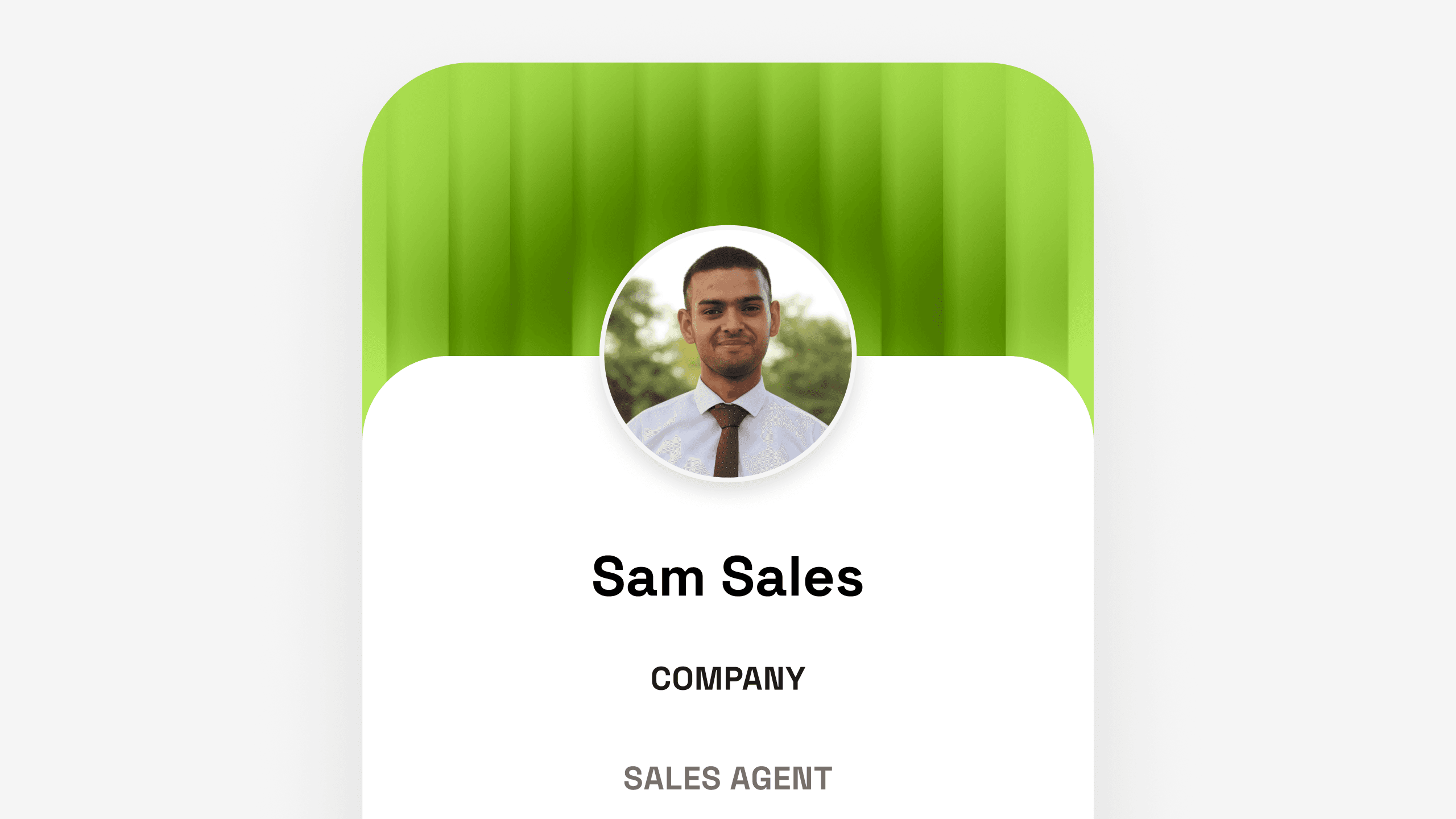
Choosing the best digital business cards for sales departments is a different problem than picking one for yourself. When thirty or three hundred reps are sharing their contact details at events, in discovery calls, and across the field, the card is no longer a personal tool. It is a brand asset that the company needs to control.
Most platforms do a reasonable job for individual users. The harder question is what happens when a rep's details change, when someone leaves, or when the marketing team updates the logo. Can the admin fix it once and have every card in the company reflect the change immediately, or does that require a round of emails and manual updates?
That is the question this comparison is built around. The platforms below are assessed on what actually matters to a sales manager or operations lead buying for a team: brand consistency, lead capture, analytics, and onboarding speed.
What a Sales Department Actually Needs
Before scoring any platform, it helps to be specific about the requirements. Four things come up consistently when sales teams evaluate digital business cards.
Brand consistency is the first. Every card should look like it came from the same company, with locked colours, logos, and key links, while each rep retains their own contact details and photo. This is harder than it sounds when the team has a mix of office-based and field-based staff.
Lead capture is the second. Sales teams interact with prospects at events, in meetings, and in the field. A card that captures contact information from the prospect, not just shares the rep's details, turns a passive handoff into an active pipeline step. For teams whose primary context is events, the best digital business cards for events in 2026 comparison covers this use case in more depth.
Analytics is the third. Managers need to know which reps' cards are being opened, which links are being clicked, and which call-to-action setups are generating follow-up. This data is rarely surfaced on individual plans.
Onboarding and offboarding speed is the fourth. When someone starts, their card should be live within hours. When someone leaves, their card should go dark immediately, not after an IT ticket has been processed.
Brand Consistency Across a Distributed Team
Umbel
Umbel's template system gives admins control at the field level, not just the card level. Each field on a template is assigned one of four permission policies: Set Only (the admin defines the value and the rep cannot change it), Assigned (the admin pre-fills it but the rep can update it), Editable (the rep fills in their own value), or Excluded (the field does not appear on the card at all).
In practice, a sales manager would set the logo, brand colours, and the company's primary call-to-action link to Set Only, then open the name, phone, and photo fields for each rep to personalise. The card reads as consistent from the outside and personal from the inside. When the marketing team updates the logo or changes the primary link, the admin updates the template once and every rep's card reflects the change immediately. No chasing.
Blinq
Blinq is known for its Microsoft 365 and Google Workspace integrations, which makes it a natural fit for organisations whose identity is built around those ecosystems. Its business plan includes admin controls and brand settings for managing cards across a team.
HiHello
HiHello's Business plan includes centralised card management and brand controls. It is widely used by US-based sales teams and integrates with tools like Salesforce and HubSpot. Brand lockdown is available at its higher tiers.
Mobilo
Mobilo is primarily a hardware-led platform. Its NFC cards and smart accessories are the core product, with a software admin layer on top. Brand consistency controls are present, though the platform's emphasis is on the physical product rather than the digital management layer.
Lead Capture in the Field
Umbel
Each Umbel card can include a lead form that prospects complete directly on the card page. Captured leads appear in the admin dashboard immediately and can be exported via CSV. A rep can direct a prospect to their card at the end of a meeting and the details land in the dashboard without any manual follow-up from the rep. For sales managers who want a simple, frictionless capture loop, this is the feature that makes the most difference in day-to-day use.
Blinq
Blinq supports lead capture through CRM integrations, routing data directly into connected tools. For teams already running Salesforce or HubSpot, this is a meaningful workflow advantage over form-based capture.
HiHello
HiHello includes lead capture on its Business plan. Its CRM integrations mean contacts can be pushed directly to connected systems. The configuration options are worth confirming with their sales team before purchasing.
Mobilo
Mobilo markets lead capture as a primary use case, with its hardware accessories designed specifically for high-volume event contexts. It integrates with a range of CRMs and suits reps who share their card by tapping a device rather than sending a link.
Analytics at the Team Level
Umbel
Umbel tracks card views, shares, click-through rate, and individual link clicks. At the team level, admins see performance data across the organisation, making it possible to identify which card configurations are driving follow-up and which are not. A manager with a team of forty reps can see, at a glance, whether the current call-to-action setup is generating clicks or being ignored, without asking each rep to self-report.
Blinq
Blinq provides team-level analytics on its business plans, covering card views and link activity.
HiHello
HiHello offers analytics on its Business plan. The depth of team-level reporting relative to individual plan analytics is a variable worth comparing directly before committing.
Mobilo
Mobilo's reporting is oriented around lead and tap statistics, which suits event-heavy sales teams more than teams whose primary sharing context is digital links.
Onboarding and Offboarding Speed
Umbel
On the offboarding side, an admin can deactivate a card immediately from the dashboard. That means a departing rep's card stops working the moment the decision is made. For organisations with tight security requirements around departing staff, this is the feature that removes the most operational risk. The Umbel teams page covers the full admin, template, and permission feature set in detail.
Blinq
Blinq supports bulk user management through its admin panel. Card deactivation is available on team plans.
HiHello
HiHello supports team onboarding through its admin console. Specific bulk upload capabilities are worth verifying against their current documentation before purchasing.
Mobilo
Mobilo's onboarding involves both software account setup and hardware fulfilment. For new starters who need a physical NFC card, this introduces lead time that software-only platforms do not have. In a fast-moving sales team where new hires start every week, that lag is worth factoring in.
Who Each Platform Suits
Umbel suits sales departments at South African companies where brand consistency is non-negotiable and the operations team needs cards live quickly. Its For Teams plan starts at R29 per user per month on annual billing. If the core requirements are granular template control, lead capture that does not require a CRM to function, and immediate card deactivation for leavers, Umbel is the platform built most directly for this. See also the broader best digital business cards for teams in 2026 comparison for context across team sizes.
Blinq suits sales teams that run on Microsoft 365 or Google Workspace and want their digital cards to integrate tightly with that infrastructure. It is a strong individual productivity tool within a managed team context.
HiHello suits US-based sales teams where Salesforce or HubSpot is the system of record and the goal is to push digital card interactions directly into the CRM without manual data entry.
Mobilo suits organisations where the physical NFC card remains a brand requirement and the digital layer is a supplement rather than a replacement. Large enterprise field teams who want a tap-based sharing experience alongside a shareable digital link fit this profile.
Making the Decision
The fastest way to narrow the list is to identify the single hardest requirement first. If brand lockdown is the issue, Umbel's template permission system is the most direct answer. If CRM integration is the core need, Blinq and HiHello are the stronger options. If physical NFC hardware is part of the brief, Mobilo is relevant. Most sales departments can cut from four options to two by starting there rather than comparing full feature matrices.
For teams in South Africa evaluating at local pricing, Umbel's team plan is built for this market. Start with the free plan at umbel.me to test how templates and lead capture work before committing to a rollout. Full pricing for team accounts is at umbel.me/pricing.
Ready to level up
your networking?
Create your premium digital business card in minutes and start making better connections today.
Get Started Free